Choose the seamer only after the can and end are identified. Confirm their dimensions and materials, the intended product, how cans and lids will be fed, and how the finished seam will be evaluated on representative samples.
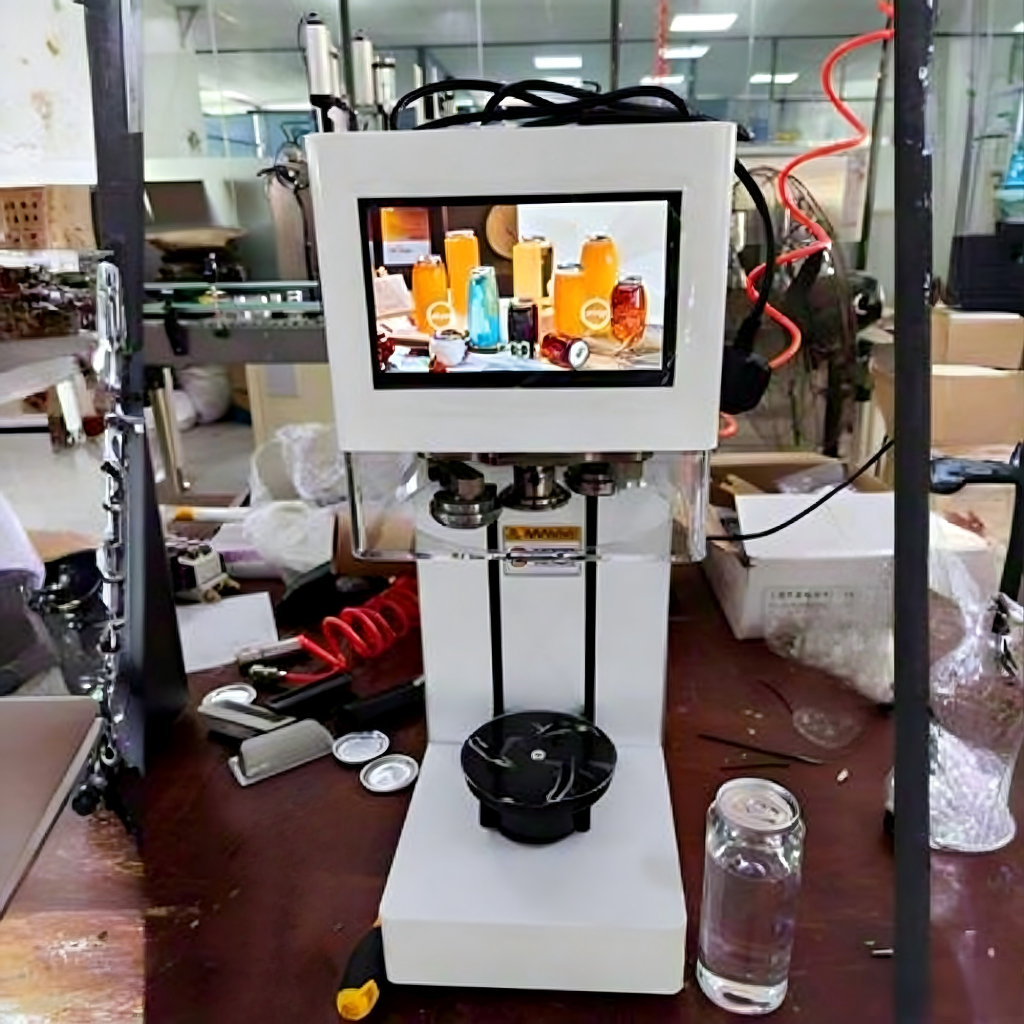
1. Define the can and end as a matched pair
Share a drawing or measured sample of the container and its matching end. Diameter alone is not enough: body height, flange, end profile and material can change the tooling and adjustment needed. List every pack format you expect the machine to run, including future sizes.
A round PET container with an aluminum end, for example, is a different package from a metal food can. A title that mentions both does not confirm that one offered machine can run both without different parts or settings.
See the current can seaming range for the equipment families shown on this site.
2. Map the work around the seaming head
Describe what happens before and after the seam is formed: how the filled can arrives, whether an operator places the end, how the can is positioned, and where the closed pack goes next. “Automatic” can refer to different parts of that sequence, so ask for the exact scope in the quoted configuration.
| Question | Why it matters |
|---|---|
| Who feeds cans and ends? | It determines operator work and any required feeder or conveyor. |
| How many can formats? | It affects change parts, settings and changeover planning. |
| What output is needed at each format? | Compare quoted performance using your real container and staffing arrangement. |
| What follows sealing? | Inspection, coding, labeling and packing may need space or integration. |
3. Compare the work included at each automation level
Two machines can both be described as automatic while requiring different operator actions. Compare a quotation against the same pack and the same production task, not just the word “automatic.”
| Work step | Ask the supplier to show |
|---|---|
| Can infeed | Whether an operator places each filled can or a conveyor feeds it. |
| End placement | Whether the end is placed by hand or delivered by a feeder included in the quote. |
| Seaming cycle | The exact tooling and settings used with your can and matching end. |
| Discharge and checks | Where the closed can goes, who removes it, and how the seam is inspected. |
Ask for a complete cycle using your supplied pack. A video of the seaming head alone cannot show the labour or equipment needed around it.
4. Agree how the seam will be checked
The lid curl and can flange are formed together by the seaming operations. The chuck, rollers and support must match the pack. A running demonstration is useful, but it is not a substitute for checking the finished seam against the can and end supplier’s specification.
Agree the sample size, inspection method and acceptance criteria before a trial. Ask for the observed result on your supplied cans and ends, and record the tooling and settings used. If your product has additional process or shelf-life requirements, define those separately with the relevant packaging and process specialists.
5. Compare the complete quoted configuration
For US and Canadian projects, provide the installation destination and available electrical supply. Ask the seller to state the quoted voltage, included change parts, feeding equipment, utilities, documentation, installation and training scope. These details should appear in the final quotation for the selected machine rather than being inferred from a general product page.
Do not use a price or a speed from a different model as the basis for your line plan. Confirm the offered model and run a representative sample trial where practical.
Save this for your enquiry
Information to send before choosing a machine
- Can body and matching end: drawings, material, diameter, height and physical samples if available
- Packaged product and relevant filling or closing conditions
- Current and future can formats; changeover frequency
- Required output for each format and number of operators
- Whether can feeding, end placement and discharge should be manual or automated
- Destination, available power, planned utilities and requested documentation
- Seam inspection method and acceptance criteria supplied by the container/end specification
These details support a configuration review; they do not establish performance or compatibility until the proposed equipment and representative samples are checked together.
Continue your equipment review
Explore Deepack can sealing machines · How to Specify a Tray Sealing Machine: Tray, Film and Workflow
Need to discuss a specific pack? Contact Deepack or browse our current Alibaba listings.